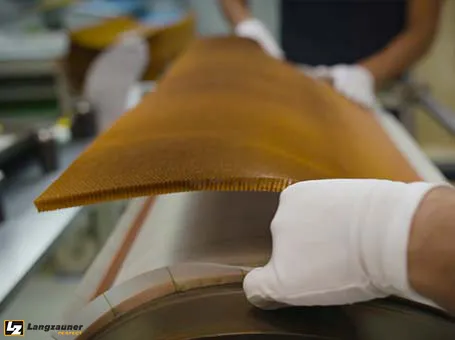
PCM in Practice: When Composite Manufacturing Becomes an Industrial Process
Why automated PCM production is becoming a key success factor in advanced composites
The performance of a composite component is often measured by its weight, strength, or structural efficiency. Yet in reality, the true challenge begins long before the finished part leaves the mold.
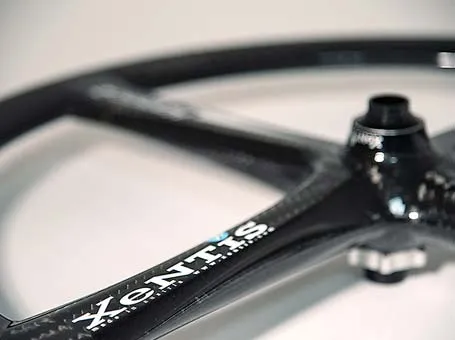
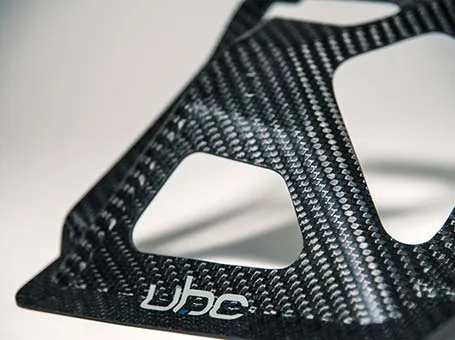
Companies such as XeNTIS Carbon Technology oder UBC Europe demonstrate what is possible with modern carbon fiber composites. From high-performance sporting goods to demanding aerospace and industrial applications, the expectations placed on composite components continue to rise.
At the same time, manufacturers face an increasingly important question:
How can high-quality composite parts be produced consistently, efficiently, and at scale?
This is where Prepreg Compression Molding (PCM) is gaining momentum.
From Prototype to Industrial Production
Many composite products begin as prototypes, low-volume projects, or specialized applications. As demand grows, however, manufacturers face new challenges.
The focus shifts from material performance alone to questions such as:
- How can production cycles be optimized?
- How can quality be maintained across every part?
- How can process data be monitored and documented?
- How can manual operations be reduced?
- How can production be scaled efficiently?
The answer increasingly lies in industrialized manufacturing processes rather than standalone equipment.
Why Automation Matters
In today’s composite industry, competitive advantage is no longer determined solely by material expertise or press technology.
Success depends on how well the entire production process works together.
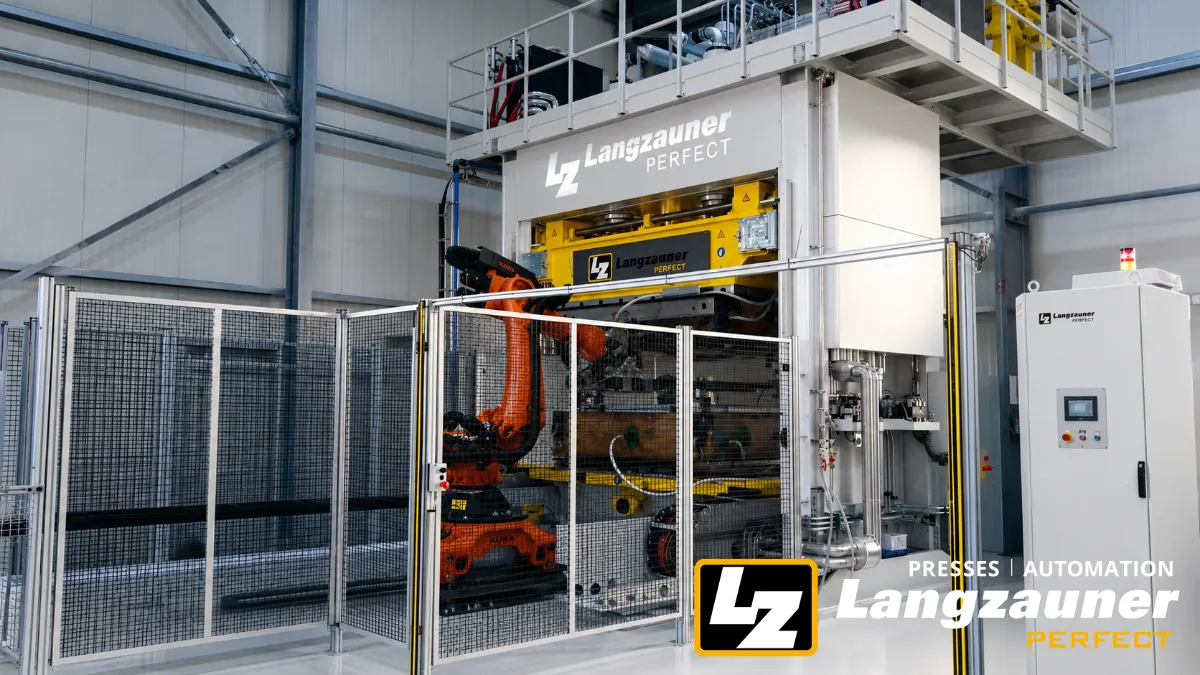
Material handling, robotics, tooling logistics, process monitoring, traceability, and quality control must operate as one integrated system. Only then can manufacturers achieve the repeatability and efficiency required for modern production environments.
This is why automation has become a critical element of advanced PCM manufacturing.
Looking Beyond the Press
At Langzauner, we view PCM as more than a molding process.
Our focus extends beyond the press itself to the complete production environment. The goal is to create manufacturing systems that combine press technology, automation, and process control into a seamless workflow.
This includes:
- Automated material handling
- Robotic loading and unloading systems
- Tool handling and logistics solutions
- Real-time process monitoring
- Data acquisition and traceability
- Integration into existing production environments
Because in composite manufacturing, the performance of a production line is defined not by its strongest individual machine, but by the efficiency of the entire process chain.